22 Jul 2026
Ocean Innovation Is Turning the Blue Economy from Extraction to Regeneration


For decades, the ocean economy was measured in ships, fish, ports, tourism and offshore resources. Today, the blue economy asks a more ambitious question: how can the sea generate prosperity without eroding the ecosystems that make that prosperity possible?
The World Bank frames it as using ocean resources for growth, livelihoods and jobs while preserving ocean ecosystem health. That matters because innovation is no longer just a race to build new devices; it is a systems challenge involving cleaner energy, smarter seafood, resilient ports, better data, new finance and exciting jobs, all restoring our coastal communities.
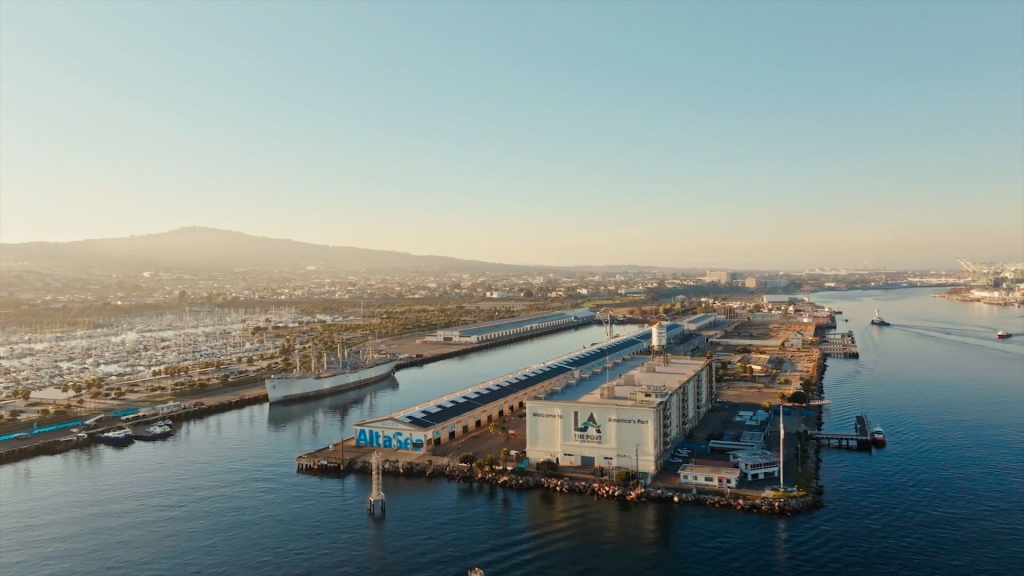
This kind of innovation in the blue economy needs new places to flourish. A vivid example is here at AltaSea at the Port of Los Angeles, a 35-acre non-profit ocean research and blue-technology campus with 250,000 square feet of labs, seawater systems and education spaces, adjacent to deep-water access for research vessels. Our location matters, because now the port is not just a remote industrial facility, but a vibrant community of engineering talent, companies, universities, workforce programs and the ocean itself.
One very visible example of the resulting innovation is harnessing the power of wave energy. EcoWave Power’s pilot at AltaSea uses large blue steel floaters, attached to existing port infrastructure, to convert wave motion into electricity. This is the first U.S. onshore wave-energy site, with a larger ambition to prove the technology and expand along the port’s breakwater to power up to 60,000 homes. Other wave energy companies like AquaNet Power and CorPower Planet make it clear that ocean renewables are ready to scale, if given a home for demonstration and local adoption.
AltaSea is also a proving ground for ocean-climate technology. Captura, a Caltech-associated company, is operating a 100-ton-per-year direct ocean carbon dioxide removal system there, using seawater and renewable electricity. Other novel ways to extract carbon from seawater are being demonstrated onsite by Equatic and Calcarea. Alongside that, USC’s 6,000-square-foot seaweed lab researches regenerative aquaculture and aquafarming technologies, while other onsite partners develop exciting new underwater robotics and 3-D printing for offshore renewable-energy infrastructure. This mix is exactly what an innovation cluster should do: let energy, food, climate solutions, robotics, and people with great ideas collide.
Indonesia offers a different but equally important model. Rather than one AltaSea-style campus, the innovation is distributed across national planning, finance, conservation and aquaculture. The UN notes that Indonesia launched its National Blue Economy Roadmap 2045 in 2023 through a process involving 17 ministries, development partners, community organizations, private-sector voices and coastal communities. Indonesia has also used a Blue Finance Accelerator to improve access to capital for selected blue-sector startups and SMEs while building government capacity for blue projects.
One result is product and production innovation in seaweed. Indonesia cultivates and exports dried seaweed as well as agar and carrageenan products, but innovators are moving beyond bulk commodities. In West Java, Sambung Asa is using integrated seaweed and milkfish cultivation to revive abandoned shrimp ponds, while others are developing seaweed-based biodegradable polymers and biostimulants for agriculture.
The larger story is that the common thread of the blue economy is regeneration: the ocean is no longer just a place to extract from, or travel across, but a platform for climate action, food security, clean energy and coastal livelihoods, where innovation is measured not only by revenue, but by healthier water, restored reefs, lower emissions and better lives for the people who live by the sea.
—
IMPORTANT NOTE:
AltaSea at the Port of Los Angeles is dedicated to accelerating scientific collaboration, advancing an emerging blue economy through business innovation and job creation, and inspiring the next generation, all for a more sustainable, just, and equitable world.
Pegasus Capital Advisors (“Pegasus”) has an ongoing thought partnership with Altasea and the two organizations exchange information on innovative ocean technologies. The companies listed in this article are not currently portfolio companies of any Pegasus client. This article does not constitute advice or a recommendation of offer to sell or a solicitation to deal in any security or financial product.